

The Lion Pride Museum Fall 2026
Preview
Publication Date
10-11-2006
Place (Bibliographic Info)
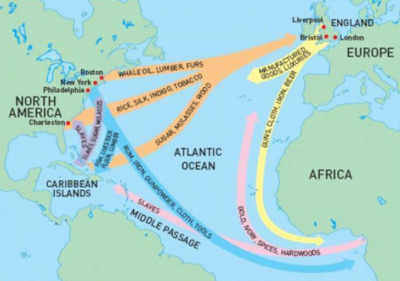
The transatlantic slave trade connected Africa, Europe, and the Americas through forced migration and the exchange of goods. These routes illustrate the geographic reach of the trade and the connections between the three regions.
Description
The transatlantic slave trade was a system that forcibly transported millions of African people across the Atlantic Ocean to the Americas. It connected Africa, Europe, and the Americas through trade, forced migration, and exploitation. European merchants and governments played major roles in expanding the trade, while enslaved Africans were treated as property and forced into labor.
Although European traders and merchants played a major role in expanding the transatlantic slave trade, African societies were not simply background participants in this history. The trade affected African communities through the forced removal of people, the disruption of families, and changes to political and economic relationships. African societies experienced these effects differently, and their responses included resistance, adaptation, and efforts to protect their communities. Examining the African perspective is important because the history of the slave trade should not be told only through the records and viewpoints of European traders and abolitionists.
This section introduces the historical background needed to understand the artifacts throughout the exhibit. It also establishes that the slave trade affected more than the people transported across the ocean. It changed communities, economies, and relationships across multiple continents.
Keywords
Map, Transatlantic Slave Trade, European Map